
Keyless Entry Systems
A code solves the key problem and quietly creates a different one, because codes spread and nobody notices them spreading.
Call (408) 418-0044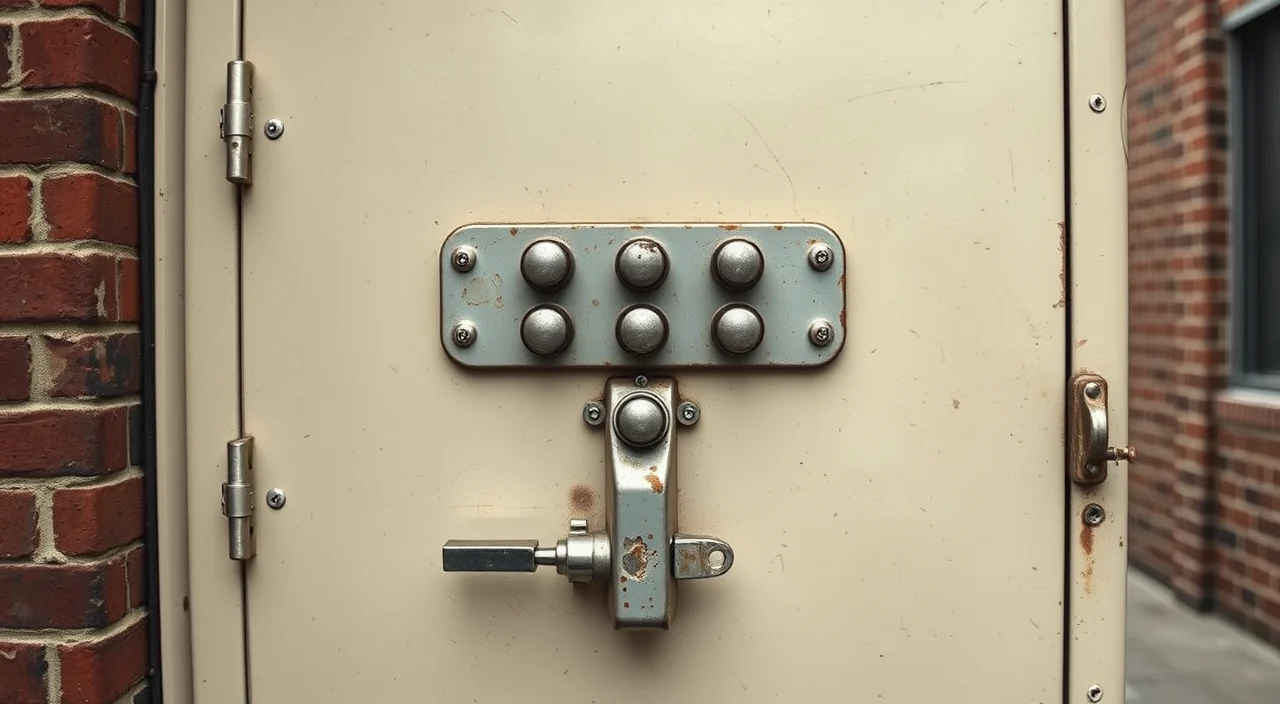
Keyless entry at its simplest is a lock that opens to a number rather than to a piece of metal. There is no cabling, no controller and often no power at all — a mechanical pushbutton lock runs on springs and a clutch, and will still be working on the day the building's network is not. For a back door, a stockroom or a staff entrance, that simplicity is the entire appeal.
The weakness is human rather than mechanical. A code everyone knows is a key everyone has copied, and it never gets handed back. Worse, a keypad used for long enough wears visibly on the digits in use, so a glance at the buttons narrows the combination considerably. Both problems have workable answers, but they have to be planned rather than discovered.
How the options differ
- Mechanical pushbutton locks need no batteries and no wiring. One code, reset by changing the mechanism, and nothing that can fail electrically.
- Battery electronic keypads hold many codes, so each person can have their own and one can be deleted without disturbing anybody else.
- Codes with a schedule or an expiry suit contractors and deliveries, and remove the awkward end-of-job conversation about what somebody still knows.
- An audit record, where the lock keeps one, tells you which code opened the door and when. It is the main reason to choose electronic over mechanical.
- Key override matters more than people expect, because it is the way in on the morning a battery finally gives up.
Think through before fitting one
- Who will know the code, and who decides when it changes.
- A fixed schedule for changing it, since codes drift into general knowledge rather than leaking dramatically.
- Whether the door is used as a way out of an occupied space, which decides what the inside of the lock must do.
- Whether the door faces weather, which rules some keypads out immediately.
- Whether you want one shared code or a code per person, because that single answer chooses mechanical or electronic for you.
If you need to know who opened a door, remove somebody's access remotely, or tie doors into an alarm, a standalone keypad will not stretch that far. see access control systems.
Common questions
How often should a door code be changed?
On a schedule you will actually keep, and immediately whenever somebody who knows it leaves. A quarterly change that happens is worth far more than a monthly one that gets skipped. Where the lock supports individual codes, deleting one person's code beats changing everybody's and reprinting the notice.
Can people work out the code from the worn buttons?
They can narrow it a long way. Four visibly worn digits reduce the guessing enormously, and shiny buttons on an otherwise dull keypad are obvious from a few paces. Choosing a code with a repeated digit, changing it before wear sets in, or fitting a keypad that scrambles its layout all help.
What happens when the batteries die?
A well designed electronic lock warns for weeks with a beep or a flashing indicator, and keeps a mechanical key override for the moment the warning is ignored. Locks with neither an override nor external power contacts are the ones that turn a flat battery into a drilling job.
Is a mechanical pushbutton lock less secure than an electronic one?
It is less flexible rather than less secure. It logs nothing and holds one code, but there is nothing to run flat and nothing to fail electronically. On a low traffic back door used by a small settled group of people, that trade is very often the right one.
Related locksmith services
Describe the lock or key problem
A short description of what happened gets the right tools on the vehicle.
Call (408) 418-0044