Patio and Sliding-Door Locks
A slider has two separate weaknesses — a latch that will not hold, and a panel that can be lifted straight out of its track.
Call (408) 418-0044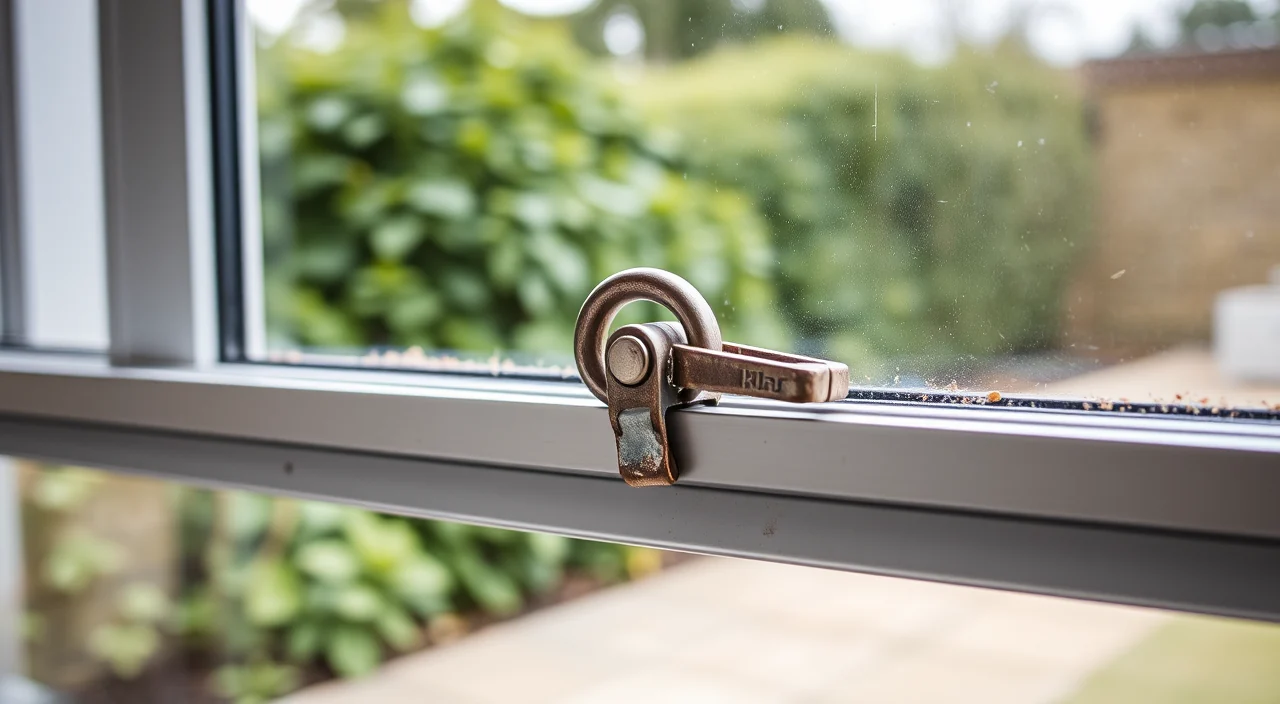
A sliding patio door has almost nothing in common with a swinging one. Instead of a bolt driving into a frame, a hook or a small clamshell latch inside the stile swings out and catches a thin keeper screwed to the fixed panel. It is a light mechanism restraining a heavy panel, and it was designed to hold the door shut rather than to resist anybody.
The failure modes are separate and both common. Either the latch wears out or the handle mechanism inside the stile breaks, so the door will not stay closed. Or the panel can be lifted in its track and taken out of the opening whole, which the latch does nothing about because the door is never actually opened.
What gets looked at on a slider
- The rollers and the track. A panel riding on flattened rollers, or dragging through a track packed with grit, sits low and out of line, and no latch meets its keeper reliably once that has happened.
- Vertical play. If the panel lifts noticeably in the track it can be lifted out, and that is answered with screws or filler in the upper track, not with a better latch.
- The keeper. The strip the hook catches is often thin aluminium held by short screws into the frame, and it deforms long before the latch itself gives up.
- Whether the handle drives the latch fully, or has to be held at a particular angle — a worn mortise mechanism inside the stile, which can usually be replaced on its own without disturbing the glass.
- What secondary security is there at the floor or the head — a foot bolt into the track, a pin through both panels, a bar — and whether somebody leaving in a hurry could release it in one motion.
Useful before the visit
- Whether it is a two panel slider, a multi panel unit, or a pair of hinged French doors that only look similar.
- Whether the frame is aluminium, vinyl or timber.
- Whether the complaint is the door not latching, the handle broken in your hand, or the panel being far too easy to lift.
- Whether the door is used daily as a route to the garden, or effectively fixed shut for most of the year.
- Whether you need it keyed from the outside, or only secured from within.
If the doors swing on hinges and meet each other in the middle, they take conventional bored hardware and a proper deadbolt rather than any of this. see deadbolt installation.
Common questions
Is a broom handle in the track enough?
It stops the panel sliding, which addresses one of the two problems and ignores the other entirely. It also cannot be released from outside the room, so it is a reasonable measure overnight and a poor one as a permanent arrangement.
My door only latches if I lift it slightly. What is that?
Sagged rollers, nine times out of ten. The panel has dropped a few millimetres so the hook now presents below the keeper, and lifting restores the alignment your hand has quietly learned to supply. Adjusting or replacing the rollers puts the geometry back; a bigger latch does not.
Can a sliding door take a deadbolt?
Not a conventional one — there is no jamb for a bolt to drive into and the stiles are too narrow to carry the body. What it can take is a surface mounted bolt into the frame, a pin through the panel at the floor or the head, or a replacement mortise latch made for that stile width.
Can these locks be keyed to match my front door?
Sometimes, where the patio hardware accepts a cylinder on a compatible keyway. Many sliding door latches use a cylinder shape found on nothing else in the house, and in that case the honest answer is that this door stays on its own key.
Related locksmith services
Describe the lock or key problem
A short description of what happened gets the right tools on the vehicle.
Call (408) 418-0044