
Restricted Key Systems
Key control is not about the strength of the lock. It is about whether one key can quietly become two.
Call (408) 418-0044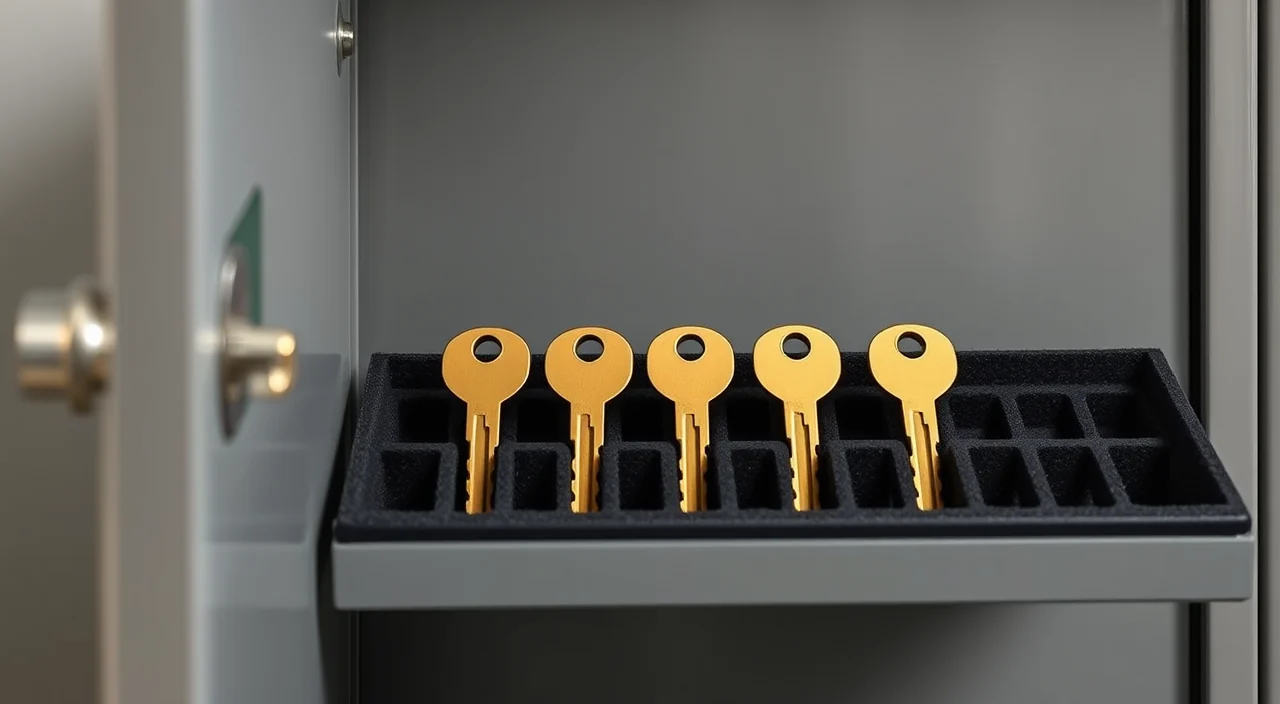
An ordinary commercial key can be copied at a hardware counter by anyone holding it, in about the time it takes to pay, and nothing about that copy is recorded anywhere. A restricted system removes that route by using a blank that is not sold openly, milled on a profile ordinary machines cannot reproduce, and duplicated only against a named authorisation held on file.
The security this buys is administrative rather than mechanical. The cylinder may be no harder to pick than the one it replaced. What changes is that the number of keys in existence becomes a number you can actually know, which is precisely the thing most businesses discover they are missing on the day a door turns out to have been opened by someone who handed a key back months ago.
What restricted means in practice
- The blank is controlled. Unlike a common profile, blanks move through a limited channel rather than hanging on a rack in a shop.
- Duplication needs authority. Copies are cut against a signature or a card naming who may request them, so a key in the wrong hands does not become two keys.
- The keyway resists substitutes. Milling along the blade blocks blanks from other profiles being forced into the keyway and cut to fit.
- The record is the product. A restricted system with no maintained list of holders is just an inconvenient keyway that still tells you nothing.
- It stacks with master keying. Restriction controls copying, hierarchy controls reach, and most buildings that need one need both.
Decide these before committing
- Who may authorise a new copy, and who signs when that person is away.
- Which doors justify it, which is usually exterior, cash handling and records rather than every interior office.
- How keys will be issued and recovered as people join and leave.
- Whether contractors and cleaners will hold keys, and what happens at the end of a contract.
- Whether the building is leased, since the landlord may need access to the same openings.
If nobody is copying keys and the real problem is that too many people can reach too many doors, hierarchy is the fix rather than restriction. see master key systems.
Common questions
Can a restricted key really not be copied?
Not by ordinary means. The blank is not on open sale and the profile defeats standard duplicating machines, so the practical route to a copy runs back through the authorisation on file. It is a strong administrative control rather than a physical impossibility, and it is a different world from a key anyone can walk into a shop with.
What if we need a copy in a hurry?
The named authoriser requests it and the key is cut against that authority. Put more than one name on the list when the system is set up, because a single authoriser who is away is the most common reason a business starts propping a door open instead.
Do we have to replace every lock to move to a restricted system?
Usually only the cylinders. In most commercial hardware the cylinder is a separate component that threads or clips into the lock body, so the lever, the latch and the door prep stay untouched and only the keyed core changes. That keeps the work and the disruption to the doors rather than the openings.
Is this worth it for a small business?
It depends far less on size than on how often people come and go. A three person office where nobody has left in years gets little from it. A cafe with seasonal staff, or a unit where trades come and go, gets a great deal, because the realistic failure is uncontrolled copies rather than a forced door.
Related locksmith services
Describe the lock or key problem
A short description of what happened gets the right tools on the vehicle.
Call (408) 418-0044