
Car Key Extraction
The single most useful thing you can do with a snapped key is stop touching it.
Call (408) 418-0044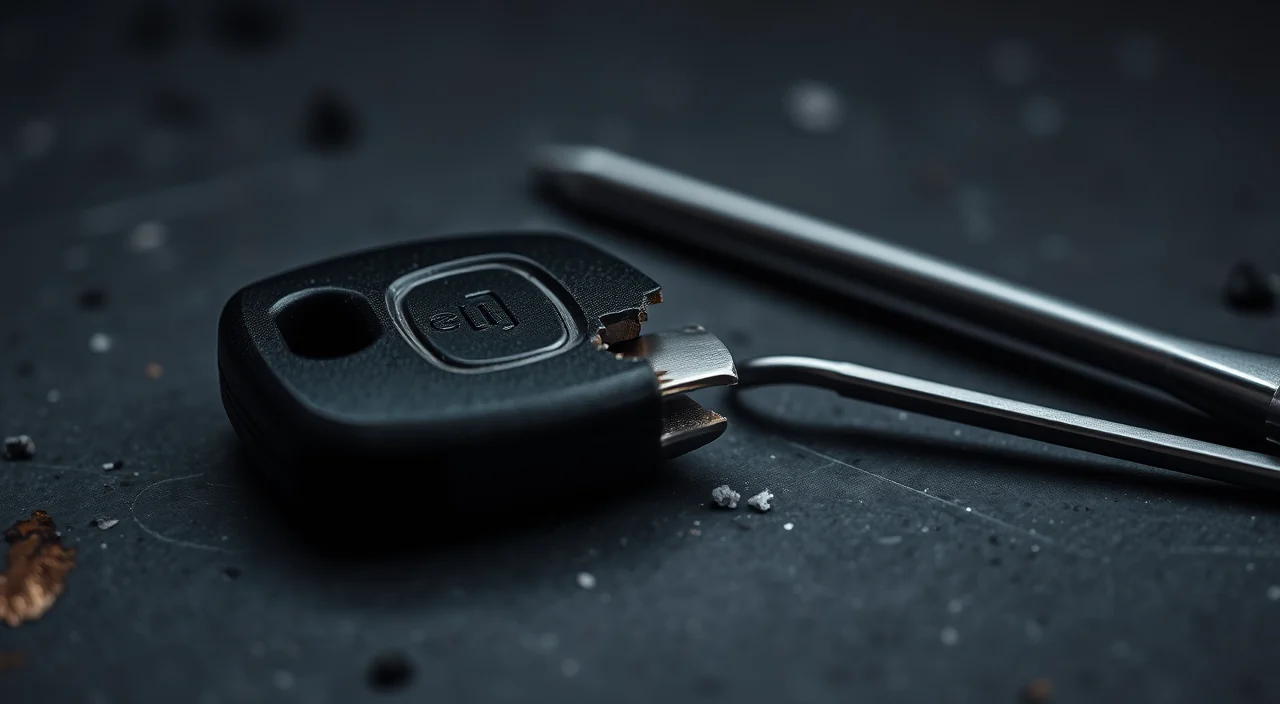
When a key breaks in a lock, the broken section is usually sitting loosely in the keyway and can be withdrawn with the right thin tool. Every attempt to fish it out with pliers, glue, or another key tends to push it deeper, rotate it out of alignment, or damage the wafers it is resting against — turning a short extraction into a cylinder replacement.
Keys break because they were already failing. Metal fatigue from years of turning, a blade thinned by wear, or leverage applied to a lock that was stiff. That matters, because extracting the broken piece and cutting a copy of it reproduces the same weak key.
What to do and not do
- Do not turn anything. If the broken piece is still aligned with the keyway it comes out far more easily.
- Do not use glue. It bonds the fragment to the wafers, and from there the cylinder almost always has to come out.
- Do not push it deeper trying to get a grip — depth is the main thing that makes extraction hard.
- Keep the part still in your hand. The two halves together give a locksmith the full profile to cut a fresh key from.
- If it broke because the lock was stiff, say so — the cylinder likely needs attention too.
Have this ready
- Which lock it broke in: ignition, driver's door, passenger door or trunk.
- The half of the key you still hold.
- Whether you have another working key.
- Year, make and model.
- Proof of ownership.
If the key is intact and simply will not turn, nothing needs extracting. see ignition repair.
Common questions
Will the lock be damaged by the extraction?
Usually not, when it is done before anything else has been tried. Most extractions use a thin hooked tool alongside the fragment. Damage happens when the piece has been forced deeper or glued in place.
Can you cut a new key from the broken half?
Often, especially with both halves. Where the break destroyed part of the profile, the key is cut from the vehicle's own data instead — which is the better result anyway, since it will not copy the wear that caused the break.
Why did my key snap in the first place?
Fatigue, nearly always. Repeated turning work-hardens the metal at the shoulder, and a key that has been used to lever a stiff lock, or carried on a heavy keyring that puts constant side load on the blade, gets there faster.
Related locksmith services
Describe the lock or key problem
A short description of what happened gets the right tools on the vehicle.
Call (408) 418-0044