
Key Duplication Service Near Me
“Key duplication service near me” usually means one of two things: a copy made by tracing the key you have, or a key cut to the lock's own code when the lock records one. Which applies changes what has to be brought to the visit.
Call (408) 418-0044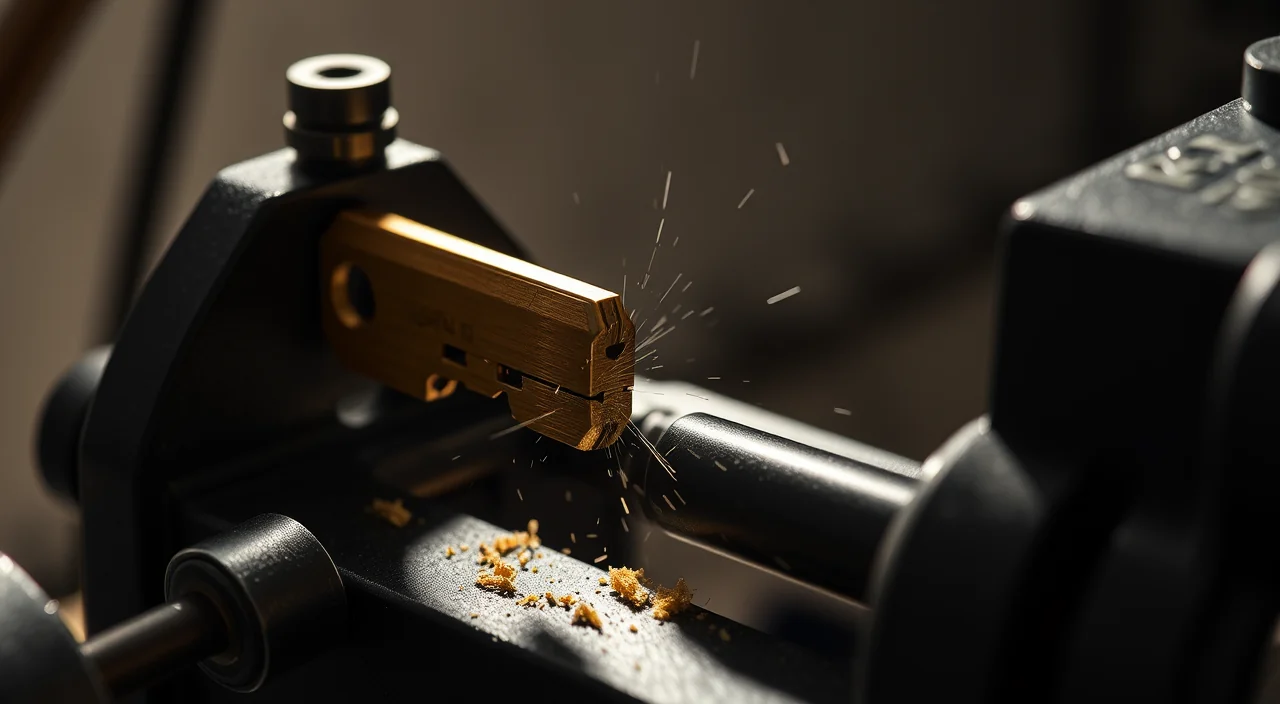
There are two ways to make a house key and they are not equivalent. A duplicate is traced from the key you hand over, so whatever wear that key has collected is faithfully reproduced along with the cuts. A key cut to code is machined to the depth specification the lock was built around, which produces a key that fits the lock better than the one currently in your pocket.
That difference explains the classic complaint of a copy that works in one door and sulks in another. Every generation of tracing drifts slightly, and a tight cylinder rejects a key that a worn cylinder happily accepts. A key made from a copy of a copy sits measurably further from the original than anyone at the machine can see.
What decides whether a copy will work
- The condition of the source key. A blade with rounded peaks and a polished, worn face hands the machine a tired profile to trace, and the copy starts life already halfway to failing.
- The blank. A blank on the right keyway but in a softer alloy wears quickly, and a near-miss blank that seems to fit will bind against the warding inside the plug.
- Whether the key is single or double sided, and whether the cuts sit on the edges, on the flat face as shallow dimples, or on both.
- Whether the key is on a restricted profile. Some blanks are deliberately not sold over a counter, and that inconvenience is the entire point of the system.
- Whether the cylinder still carries a code, stamped on the plug or recorded when it was last keyed, because that allows cutting to specification instead of tracing.
Bring or know these
- Every key you hold for that lock, so the least worn one can be used as the source.
- How many copies you want, and whether any of them go to someone who should not keep it permanently.
- Whether the key belongs to a house door, a mailbox, a padlock, a cabinet or a gate, because the blanks differ completely.
- Whether any door has recently started refusing the key, which points at the lock rather than the copy.
- Whether the key is marked restricted or arrived with a card from whoever installed the system.
If the key belongs to a vehicle, the metal is only half the story — most car keys also carry electronics that have to be introduced to the car before it will start. see spare car keys.
Traced copy versus code cut
A traced copy reads the cuts on the physical key and reproduces them — quick, but it inherits any wear already in that key, and a worn original makes a worse copy. A code cut instead reads the lock's own recorded combination (stamped on some cylinders, on file with some manufacturers, or decoded from the cylinder directly) and cuts a fresh key to that number, which is why it can outperform tracing an old key even when no original is available at all.
Common questions
My new copy will not go all the way in. What went wrong?
Almost always the blank. One from a neighbouring family can enter far enough to feel correct and then stop dead against a ward inside the plug that the right profile would have cleared. Filing it down to make it go is how people end up with half a key inside the lock.
Can a key stamped 'do not duplicate' be copied?
Physically, yes, because that phrase is printed on an ordinary blank and carries no mechanical protection at all. It is a request, not a control. If you genuinely need copying to be difficult, that means a restricted keyway where the blanks themselves are not available to the general trade.
How many times can a key be copied before it stops working?
There is no fixed number, but the drift compounds, and a copy taken from a copy is where doors typically start becoming fussy. The fix at that point is to cut a fresh key to the lock's own specification, treat that one as the new original, and copy from it rather than from the tired one.
Are self-service key machines any good?
For a plain house key taken from a fresh original, often perfectly adequate. What they cannot do is judge that your source key is worn out, select an unusual blank, or recognise that the door is rejecting copies because the cylinder itself is failing. The machine measures the key it is handed and nothing else.
Can a key be duplicated if the original is badly worn?
Yes, but a worn original copies its own wear into the new key, which is why a code cut (reading the lock's recorded combination rather than tracing the physical key) is usually the better route once a key has visibly rounded or thinned teeth.
Related locksmith services
Describe the lock or key problem
A short description of what happened gets the right tools out for the job.
Call (408) 418-0044